Loading

Carl & Strups World

The historical timeline – Carl Stülpner and his time

The biographical chronology on the left, the story on the right. Historical context carries its own date without moving the main scale.

Carl Stülpner

Perspective

Historical prelude

Carl Stülpner

1762 — 1832

Scharfenstein · Ore Mountains

17th century

Life in the Ore Mountains

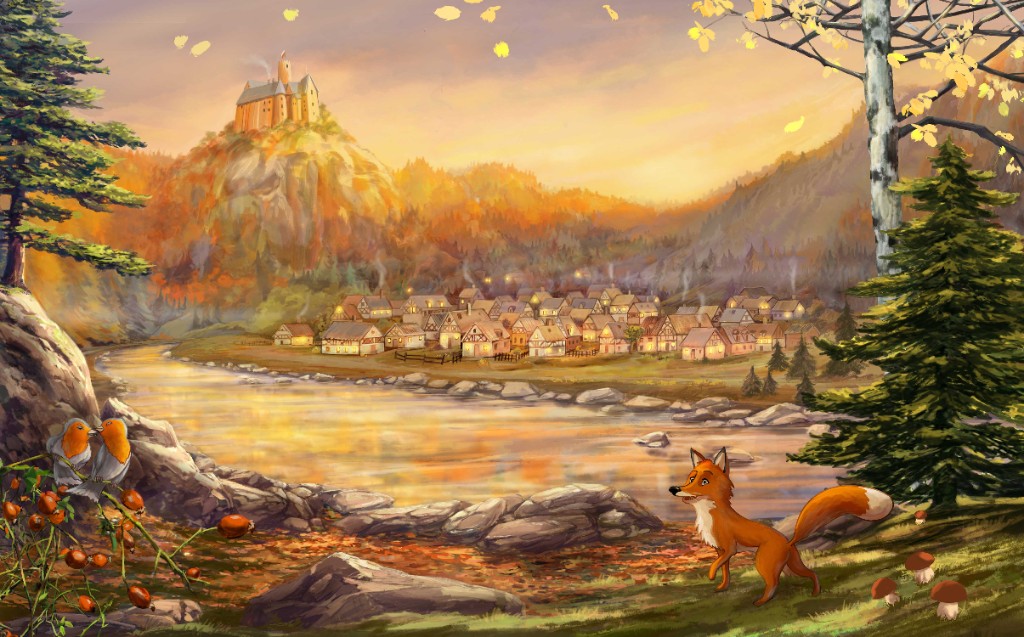
There was silver under the earth; above it, life was sparse. Long winters, hard work and dependence on those who held the land shaped the days of many families. The mine, the forest and the craft gave them what they needed to live.

Carl is born.

30 September · Scharfenstein

This is where his life begins.

Volume threshold

In the book

Context · 1762

Why does this volume matter?

When Carl was born in 1762, the Seven Years’ War was still ongoing.

Saxony and the Ore Mountains were shaped by war and insecurity. Carl grew up as the youngest of eight children in modest circumstances on a Häusler smallholding in Scharfenstein – a small rural holding of the lower classes.

Lordship and property rights shaped the daily life of ordinary people: forest, game and many ways of securing a livelihood were not freely available to them. Volume 01 thus shows the world Carl was born into – and from which much of what would shape his later life can be understood.

Discover knowledge

Burning questions

Evidence

How do we actually know this?

Documented, traditional or narratively compressed: here the source situation for Volume 01 becomes visible – without inventing primary sources.

Historically documented Traditional Artistic condensation

Sources & citations

  • Carl’s family

    Carl is the youngest of eight children.

    Historically documented

    Literature

    Johannes Pietzonka
    Carl Stülpner – Legende und Wirklichkeit
    p. 15

  • The black hussars

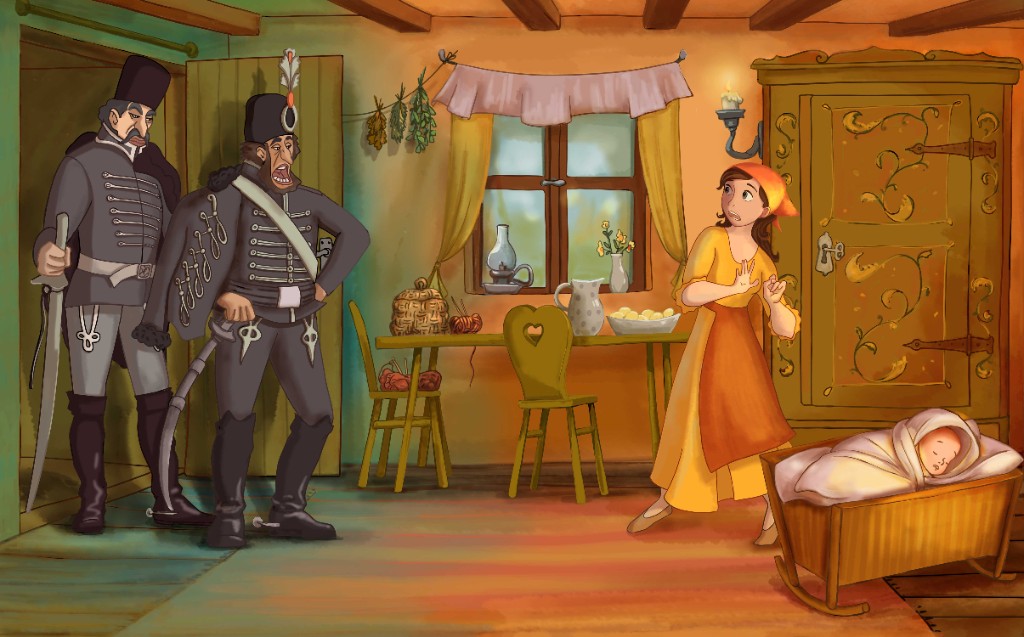
    At the hour of his birth, tradition tells of black hussars.

    Traditional

    Origin of the story

    Schönberg · Stülpner biography

    Historical context

    Independently of that scene, black hussars are attested in the region in contemporary sources. Pietzonka (p. 15) notes excesses by hussars in Großolbersdorf in 1761 and cites the Schönbrunn pastor’s diary on Belling’s black hussar corps.

    Assessment

    The concrete scene at the birth house, by contrast, comes from the Stülpner tradition. Whether these particular hussars stood in front of the Stülpner family house cannot be independently proven.

    Literature

    Johannes Pietzonka
    Carl Stülpner – Legende und Wirklichkeit
    p. 15

  • The scene in the book

    Volume 01 draws the traditional hussar episode into narrative form.

    Artistic condensation

    Basis

    Tradition of the hussar episode.

    Historical frame

    Military presence in the region is historically attested.

    Treatment in the book

    Dialogue, concrete sequences and individual scenic details are narrative shaping.

Historian ·

Explore further

Go deeper into Carl's world.

History, knowledge and materials — for your perspective.

Before Carl

Before Carl was born.

Millions of years of geological history. Centuries of forest, ore, labour, war and change — until, in 1762, a boy is born in Scharfenstein.

  1. around 340–300 million years ago

    A mountain range is born.

    Historically documented

    Tectonic plates collide. Rocks are pushed deep down, transformed under enormous pressure and thrust upwards again. Towards the end of this mountain-building process, magma rises and solidifies deep underground into granite.

    Nature
    Ferns · Horsetails · Club mosses
    Animals
    Arthropods · Amphibians · Early reptiles
  2. Millions of years later

    The old mountains disappear.

    Historically documented

    No mountain range lasts for ever. Water, wind and weathering wear the ancient heights down again over vast stretches of time. Rock that once lay deep underground comes ever closer to the surface.

    Nature
    Erosion · Weathering · Rivers
  3. for about 30 million years

    The Ore Mountains rise up.

    Historically documented

    The Earth's crust rises and tilts. The Ore Mountains slope down comparatively gently towards Saxony, but much more steeply towards Bohemia. Geologists call this tilted shape a Pultscholle (a tilted fault block).

    Nature
    Plateaus · Valleys · Rivers
  4. around 21 million years ago

    Fire shapes the landscape.

    Historically documented

    Lava flows through a river valley of that time at what is now the Scheibenberg. Later, the softer rock all around is worn away more quickly. The hard volcanic rock remains standing – and the former valley becomes a height.

    Nature
    Lava · Basalt · Relief inversion

    One moment …

    Was the Scheibenberg really a volcano?

    Not the hill itself. What lies on top today is the remnant of a lava flow that once ran through a valley. The place where the eruption occurred was elsewhere.

  5. Ice Ages

    Cold shapes the Ore Mountains.

    Historically documented

    The climate turns extremely cold again and again. At times the Ore Mountains lie in the foreland of the glaciers; frost, wind and water shape the landscape. In many places, open cold steppe replaces the forest.

    Nature
    Grasses · Herbs · Dwarf shrubs
    Animals
    Mammoth · Woolly rhinoceros · Wild horse · Reindeer
  6. after the last Ice Age

    The forest returns.

    Historically documented

    The climate grows warmer. First birch and pine spread, later hazel and denser forests. Over thousands of years, the forest world takes shape into which people will later push permanently.

    Nature
    Birch · Pine · Hazel
    Animals
    Elk · Aurochs · Bison · Red deer · Roe deer · Wild boar
  7. around 4,000 years ago

    People find tin.

    Historically documented

    Long before the famous mining towns, tin is already being extracted in the Ore Mountains. Archaeological traces near Schellerhau show surface tin mining around 2000 BC. This pushes the beginning of Ore Mountain mining history far back into the Bronze Age.

    People
    Prospectors
    Work
    Tin extraction
  8. around 1,000 years ago

    A vast forest lies over the mountains.

    Historically documented

    Where villages, mining towns and roads will later lie, great forests stretch out. The mountains are only thinly settled. In those days a forest can be a border, a refuge and a danger all at once.

    Nature
    Beech · Silver fir · Spruce
    Animals
    Brown bear · Wolf · Lynx · Red deer · Roe deer · Wild boar

    One moment …

    Was this the legendary Miriquidi?

    The name Miriquidi is documented in medieval sources. Simply equating it with the whole of today's Ore Mountains, however, is too simple: which areas of forest it meant in each case cannot be determined with certainty everywhere.

  9. 12th century

    Forest becomes home.

    Historically documented

    Settlers clear forest, build farmsteads, lay out fields and found villages. Behind many farmsteads, long strips of land stretch up the slope – the typical Waldhufen (forest strip farms). By about 1200, permanent settlement has already reached large parts of the Ore Mountains.

    Nature
    Clearing · Fields · Meadows
    People
    Settlers · Farmers · Families
    Work
    Clearing · Building · Sowing · Harvesting
  10. 1168

    Silver changes the Ore Mountains.

    Historically documented

    Silver ore is discovered at Christiansdorf, later Freiberg. Miners, craftsmen, traders and their families come to the region. Mining begins to change the landscape, work and society of the Ore Mountains fundamentally.

    People
    Miners · Craftsmen · Traders
    Work
    Silver · Mining · Smelting works
    Power
    Territorial ruler · Mining prerogative
  11. from about 1185/1200

    Ore Mountain miners go deep.

    Historically documented

    In Dippoldiswalde, miners drive shafts and galleries deep into the mountain. As early as 1210–1230 they reach depths of about 15 to 26 metres. Timber holds the mountain open, ladders lead down, windlasses move loads.

    Work
    Shaft · Gallery · Ore
    Technology
    Windlass · Ladders · Mine timber
    Nature
    Beech · Silver fir
  12. 13th–14th century

    Silver is only the beginning.

    Historically documented

    Alongside silver, tin becomes ever more important. For Ehrenfriedersdorf, tin ore extraction is documented in a charter of 1293. Ore from the mountains increasingly links the region to distant markets.

    Work
    Silver · Tin · Ore processing
    People
    Miners · Smelter workers · Traders
    Technology
    Extracting · Dressing · Smelting
  13. 15th–16th century

    Ore Mountain miners become masters of their craft.

    Historically documented

    New discoveries drive mining ever deeper. Water has to be controlled, ore hauled up and rock surveyed. Hard labour turns into a highly specialised technical world.

    Work
    Miner · Mine foreman · Smelter worker · Craftsman
    Technology
    Shafts · Water power · Haulage · Surveying
    People
    Specialists · Entrepreneurs · Mining officials
  14. 1527

    The ore gives the mountains their name.

    Historically documented

    Mining now shapes the region so strongly that even its name changes. In mining records of 1527, the name “Erzgebirge” appears for the first time.

    Work
    Silver · Tin · Copper · Iron · Cobalt

    One moment …

    What were the Ore Mountains called before?

    Earlier names were not consistent. Sources speak, among other things, of the Bohemian Forest or the Bohemian Mountains. The medieval name Miriquidi, too, is linked with forest areas of this wider region – but not neatly with today's borders.

  15. 1618–1648

    A war devastates Central Europe – and reaches the mountains.

    Historically documented

    Conflicts over religion and political power grow into the Thirty Years' War. Armies march through Saxony, demanding food, money and quarters. For the population, war and epidemics mean death, flight, plunder and economic collapse.

    War
    Soldiers · Plunder · Billeting
    People
    Flight · Hunger · Epidemics
    Work
    Farmsteads · Mining · Crafts
    Animals
    Wolf
  16. after 1648

    The people of the Ore Mountains start again.

    Historically documented

    After three decades of war, rebuilding begins. People from Bohemia cross the border, among them Protestant exiles with their own knowledge and trades. Where one livelihood is no longer enough, new ones emerge.

    People
    Locals · Exiles · Families
    Work
    Mining · Woodturning · Carving · Home work
  17. 17th century

    The forest has to serve almost every purpose.

    Historically documented

    Mines need pit timber. Smelting works need fuel. People need houses and firewood. The forest is a habitat – and at the same time one of the most important sources of raw materials in the Ore Mountains.

    Nature
    Beech · Fir · Spruce · Pine
    Work
    Mining · Smelting works · Charcoal burning · Construction timber
    Animals
    Brown bear · Wolf · Lynx · Red deer · Roe deer · Wild boar
    Power
    Forest ownership · Rights of use · Hunting rights
  18. 1713

    A Saxon thinks beyond the next tree.

    Historically documented

    Hans Carl von Carlowitz knows the enormous demand for timber in mining. In 1713 he publishes the “Sylvicultura oeconomica”, the first purely forestry textbook in the German language. Forest is to be managed in such a way that its use remains possible in the long term.

    People
    Hans Carl von Carlowitz
    Work
    Forestry · Mining
    Nature
    Forest · Timber · Regrowth
  19. 18th century

    The forest does not belong to just anyone.

    Historically documented

    The forest provides food, timber and work – but its use is regulated. Even game does not simply belong to whoever finds it. Hunting is a right of the lords. For people whose fields are damaged by game, this can be bitter.

    Animals
    Red deer · Roe deer · Wild boar · Wolf
    Power
    Hunting rights · Forest law · Authorities
    People
    Farmers · Foresters · Hunters

    One moment …

    Where did the bear and the lynx go?

    For centuries they belonged to the animal life of Saxony. Intensive persecution pushes large predators back further and further. By about 1750 the wolf has already disappeared from large parts of Germany as a permanently resident species; individual animals are still shot for a long time afterwards.

  20. 1756–1763

    Prussia occupies Saxony.

    Historically documented

    In 1756 the Prussian army marches into Saxony. The Seven Years' War is fought between the great European powers and reaches far beyond Saxony. For the people here it means above all soldiers, supply burdens, levies and the danger of being drawn into the war themselves.

    War
    Occupation · Soldiers · Billeting
    Power
    Prussia · Saxony · Military
    People
    Civilians · Soldiers · Families
  21. from 1758

    Black Hussars.

    Historically documented

    In 1758 a hussar unit is formed in the Prussian army under Wilhelm Sebastian von Belling. Their black uniform makes them famous. Hussars are fast, light horsemen – a branch of the army with Hungarian roots, which other European armies now also employ.

    War
    Hussars · Cavalry · Prussia
    People
    Wilhelm Sebastian von Belling

    One moment …

    Were the Black Hussars Hungarian?

    Not Belling's men. The hussar tradition originally comes from Hungary and shapes the clothing and style of this light cavalry. Belling's Black Hussars, by contrast, are a Prussian unit of the Seven Years' War.

  22. 1762

    And then Carl is born.

    Historically documented

    The Ore Mountains have long since changed. Great forests have become villages, fields and mining towns; Ore Mountain miners have worked their way deep into the mountain and created a highly developed world of work. Yet war, lordship, and forest and hunting rights continue to shape people's lives.

    Then a boy is born in Scharfenstein:

    Carl Stülpner.

    People
    Carl Stülpner · Family · Scharfenstein
    Work
    Agriculture · Mining · Forest · Crafts
    Power
    Forest rights · Hunting rights · Authorities
    War
    Seven Years' War
    Animals
    Red deer · Roe deer · Wild boar · Fox · Badger · Hare

Materials

To take with you.

  • Background PDF

    The Ore Mountains around 1762

    A historical overview of the region, living conditions and Carl’s immediate world.

    Download PDF 64 KB
  • Source sheet PDF

    Sources and original passages for Volume 01

    The key historical references, traditions and literature for the volume.

    Download PDF 89 KB
  • Trail sheet PDF

    On Carl Stülpner’s trail

    Places, historical traces and prompts for further exploration.

    Download PDF 63 KB
  • Fact sheet PDF

    1762 at a glance

    The key dates, people and connections around Carl’s birth.

    Download PDF 71 KB

Volume exit

Bridge to the next volume

Prices are rising.

Grain and stores grow scarce. The dearth moves through Saxony and the Ore Mountains.

Hardship deepens.

Scarcity and hunger reach the region clearly. Carl is about nine years old.

Volume threshold

In the book

Context · 1770–1772

Why does this volume matter?

Carl is still a child when the Ore Mountains are struck by a severe famine and period of soaring prices.

In 1770 a series of unusual weather events and poor harvests begins. In 1771 the harvest is destroyed again. Grain and bread prices rise dramatically. At the start of 1772, the ban on Bohemian grain exports makes matters even worse. Rising prices turn into hunger.

People sell their belongings, search the fields for anything edible and boil grass into mash. Disease spreads among the weakened population. Many die. Others leave their homes and take to the country roads.

Scharfenstein and Carl's family are not spared either.

Volume 02 therefore does not simply show a harsh winter or a poor harvest. It shows a time in which Carl experiences how quickly poverty can turn into hunger – and how important it is not simply to leave a person in need lying there.

These experiences belong to the formative years of his childhood and help us understand why justice, helping others and an eye for other people's hardship could play such a large part in his later life.

Discover knowledge

Burning questions

Evidence

How do we actually know this?

Documented, traditional or artistically condensed: here the state of the sources for Volume 02 becomes visible – without invented primary sources.

Historically documented Traditional Artistic condensation

Sources & citations

  • The weather

    Unusual weather events accumulate in 1770 and 1771.

    Historically documented

    Historical context

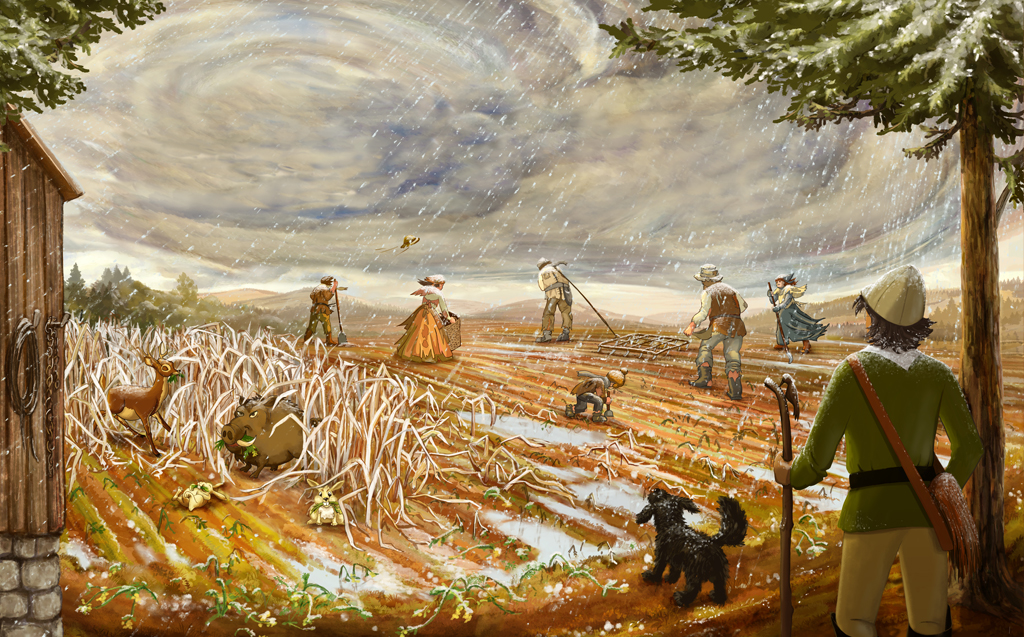
    Pietzonka names specific weather events: in 1770, thunderstorms in January, flooding of the Zschopau, snow from 18 to 22 March and a wet summer. In 1771, a mild winter, ploughing as early as February, snow in May and then rain right into August.

    Assessment

    In Pietzonka, this sequence of weather is directly linked to the poor harvests and the onset of rising prices.

    Literature

    Johannes Pietzonka
    Carl Stülpner – Legende und Wirklichkeit
    p. 19-20

  • Prices and hunger

    Grain and bread became extremely expensive within a short time.

    Historically documented

    Evidence

    Pietzonka gives concrete prices for grain, wheat, barley, oats and bread between January 1770 and June 1772. Example, grain: January 1770 – 1 thaler 12 groschen per scheffel; July 1771 – 10 thalers; June 1772 – 13 thalers 15 groschen.

    Historical context

    For 1770, Pietzonka gives an average daily wage of 4 groschen.

    Assessment

    This makes the scale of the price rises directly understandable. Staple foods became increasingly unaffordable for poor families.

    Literature

    Johannes Pietzonka
    Carl Stülpner – Legende und Wirklichkeit
    p. 19-20

  • The great migration

    During the famine, people left their homes and their families.

    Historically documented

    Historical context

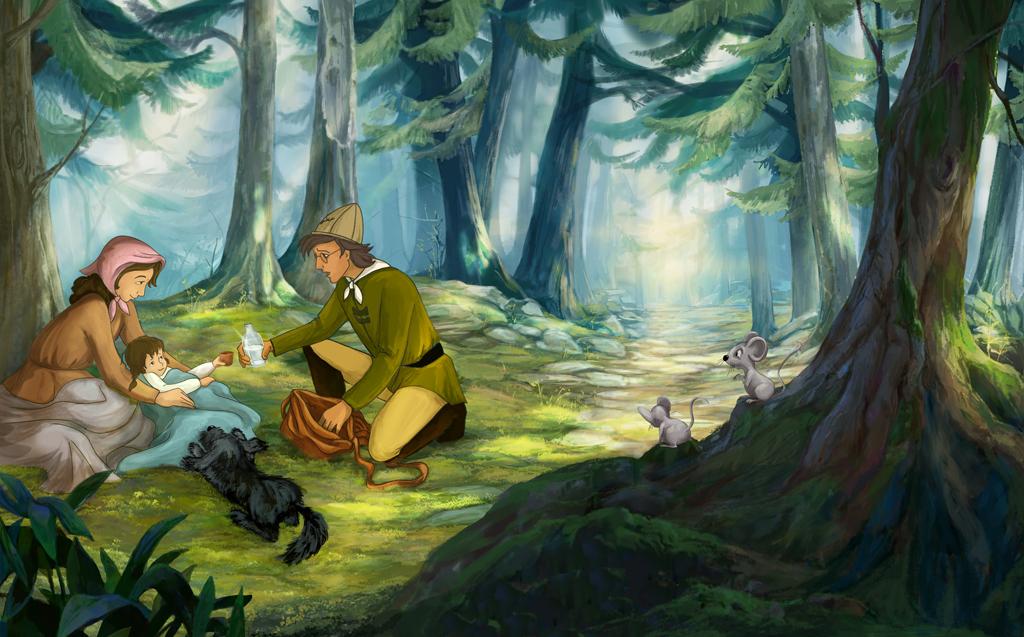
    Pietzonka describes children begging for bread, people selling their belongings, and starving people eating grass, tree bark and roots. He then reports on the “great migration”: old people leave their children, children leave their parents. Hundreds take to the country roads.

    Assessment

    The wandering, weakened people in the children's book therefore stand within a historically documented setting. The specific characters and encounters of the children's book, however, remain artistic shaping.

    Literature

    Johannes Pietzonka
    Carl Stülpner – Legende und Wirklichkeit
    p. 20-21

  • Scharfenstein

    The high mortality is documented for Carl's immediate home.

    Historically documented

    Evidence

    Pietzonka reports from the register of deaths for Großolbersdorf. By 18 July 1771, 75 deaths of that year had already been buried. After that the register breaks off. For 1772, Pietzonka gives 154 deaths. For 1774: 21 deaths.

    Historical context

    For 18 July 1771, Pietzonka cites the note that no more bearers can be found and that the corpses are being taken away by the gravedigger in a wheelbarrow.

    Assessment

    The famine is thus tangible not only in general terms for Saxony or the Ore Mountains, but directly for Carl's own surroundings.

    Literature

    Johannes Pietzonka
    Carl Stülpner – Legende und Wirklichkeit
    p. 21-22

  • Carl's father

    Johann Christoph Stülpner may have fallen victim to the famine.

    Traditional

    Assessment

    This is a historically reasoned conclusion by Pietzonka, but not clear proof of the specific cause of death.

    Basis

    Pietzonka writes that one can say “in all probability” that Carl's father, Johann Christoph, became a victim of the famine.

    Literature

    Johannes Pietzonka
    Carl Stülpner – Legende und Wirklichkeit
    p. 22

  • The scenes in the book

    Volume 02 condenses the historical famine into Carl's story.

    Artistic condensation

    Basis

    Historically documented are the weather, crop failures, rising prices, hunger, disease, high mortality and the migration of the population.

    Historical frame

    Pietzonka's account describes precisely the world in which the young Carl lived during these years.

    Treatment in the book

    The specific encounters, dialogues, Strups's role and individual sequences of events in the children's book are artistic shaping. The historical conditions are not invented as a result – the story makes them tangible for children.

Historian ·

Explore further

Go deeper into Carl's world.

History, knowledge and materials — for your perspective.

Famine years

A crisis of weather, prices and hunger.

The dearth and famine crisis of the early 1770s cannot be reduced to a single trigger. For the Ore Mountains Pietzonka describes a sequence of unusual weather events, failed harvests, rising grain prices, hunger, illness and migration.

  1. 1770

    An unusual weather sequence

    Historically documented

    Pietzonka already describes January 1770 as striking: thunderstorms, high water in the Zschopau. From 18 to 22 March snow falls; many birds freeze; the winter seed spoils. Summer stays wet. The harvest yields little. What matters is not the single extreme day, but the dense sequence of unfavourable conditions in one supply year.

    Nature
    thunderstorms · flooding · late snow · wetness
  2. 1770

    Prices begin to rise

    Historically documented

    Through 1770 grain prices rise markedly. Pietzonka gives one scheffel of grain at 1 thaler 12 groschen in January and already 4 thaler 12 groschen in December. A 7-pound loaf rises from 26 pfennig to 4 groschen 8 pfennig. The average daily wage is given as 4 groschen. Dearth thus becomes measurable: food claims an ever larger share of a small income.

    Work
    grain · bread · daily wage
    People
    poor households
  3. 1771

    The cascade intensifies

    Historically documented

    After the failed harvest of 1770 there is no recovery year. The winter of 1770/71 is unusually mild; farmers can plough as early as February. In May snow lies again. Then rain continues into August. The harvest is destroyed. The crisis becomes chronic: reserves are exhausted; the next failure hits harder.

    Nature
    mild winter · May snow · prolonged rain
    Work
    destroyed harvest
  4. 1771–1772

    Prices explode

    Historically documented

    In July 1771 Pietzonka gives one scheffel of grain at 10 thaler — against 1 thaler 12 groschen in January 1770. In June 1772 the price reaches 13 thaler 15 groschen; wheat 14 thaler; a 7-pound loaf 10 groschen and more. At the same time Bohemia blocks grain exports to Saxony in January 1772. The crisis thus affects not only the local harvest, but also supply from outside.

    Work
    grain · wheat · bread
    People
    supply from Bohemia
  5. 1772

    Hunger, emergency food, disease

    Historically documented

    Pietzonka describes children begging for bread, people selling furniture, clothes and linen, and the hungry eating grass, tree bark and roots. Fever follows hunger. Contemporary death registers speak of dying “from human misery”. Hunger here is not only missing calories — it weakens people and opens the way to disease.

    People
    begging · sale of belongings · fever
    Nature
    grass · bark · roots
  6. 1771–1772

    Scharfenstein counts the dead

    Historically documented

    For Carl’s immediate homeland Pietzonka cites figures from the Großolbersdorf death register. By 18 July 1771, 75 deaths that year had already been buried; then the register breaks off. For 1772 he gives 154 deaths, for 1774 only 21. For 18 July 1771 he quotes the note that no bearers could be found and corpses were taken by wheelbarrow. High mortality is thus documented locally — not only in general for Saxony.

    People
    death register · burials
  7. 1772

    Carl’s father — probability, not certainty

    Traditional

    Pietzonka writes that one may say “with every probability” that Carl’s father Johann Christoph fell victim to the famine. That is a historically reasoned conclusion — not clear proof of the concrete cause of death. Probability is not the same as documented certainty.

    People
    Johann Christoph Stülpner
  8. Book and history

    Documented frame — dramatized scenes

    Artistic condensation

    Historically documented are weather, failed harvests, dearth, hunger, illness, high mortality and migrations. Narratively designed are Carl’s concrete encounters, dialogues, Strups and individual help scenes. The book does not invent the crisis. It shapes experiences inside a historically documented crisis space.

  9. after 1772

    Impoverishment remains

    Historically documented

    By Christmas 1772 a loaf costs 4 groschen again according to Pietzonka. The immediate supply crisis eases. What remains is an impoverished Ore Mountains: many have lost work, property and relatives. Pietzonka describes an “army of unemployed, poor people” on the roads. The end of extreme prices is not a return to the old life.

    People
    impoverishment · unemployment
    Work
    loss of property

Materials

To take with you.

  • Fact sheet PDF

    1770–1772 at a Glance

    Key dates, prices and connections during the years of dearth and hunger in the Ore Mountains.

    Download PDF 89 KB
  • Background PDF

    The Ore Mountains during the Food Crisis

    Historical background on living conditions, food supply, social order and Carl’s immediate world, 1770–1772.

    Download PDF 78 KB
  • Source sheet PDF

    Sources and Original Passages for Volume 02

    Historical evidence clearly separating source, historical conclusion and artistic construction.

    Download PDF 96 KB
  • Trail sheet PDF

    Tracing the Years of Dearth

    Places, landscape and source clues for further investigation around Volume 02.

    Download PDF 74 KB

Volume exit

Bridge to the next volume

The years of famine leave deep scars.

The worst of the hardship begins to ease. But many families in the Ore Mountains have lost relatives, property and their economic security.

Carl loses his father.

Pietzonka considers it highly likely that Johann Christoph Stülpner died during the famine.

A new chapter begins for Carl.

His path leads to Ehrenfriedersdorf.

Volume threshold

Cart

Your cart is empty.